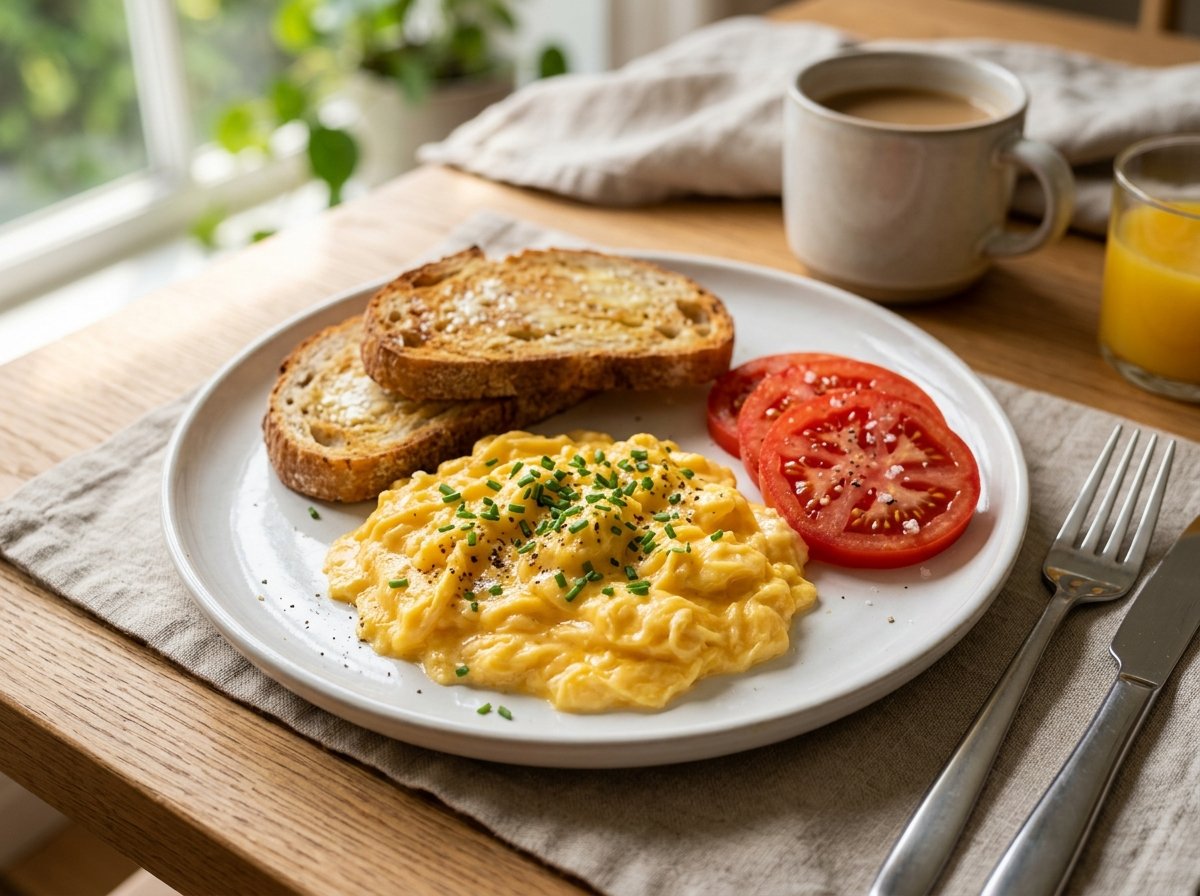
Fluffy Scrambled Eggs: Simple Tips for Perfect Eggs
Scrambled eggs are one of the simplest breakfast dishes you can make, but getting them perfectly soft, fluffy, and flavorful takes a little technique. When cooked correctly, scrambled eggs should be tender and creamy with small, delicate curds rather than dry, rubbery pieces.
The good news is that you do not need complicated ingredients or professional cooking equipment to make excellent scrambled eggs. A few fresh eggs, a little butter, seasoning, and the right cooking temperature are enough to create a delicious breakfast.
This easy scrambled eggs recipe is perfect for busy mornings, weekend breakfasts, brunch, or as a simple side dish with toast and fresh fruit. Once you understand the basic method, you can also customize your eggs with cheese, herbs, vegetables, or other favorite ingredients.
In this guide, you will learn how to make fluffy scrambled eggs from scratch, how to choose the right cooking temperature, when to remove the eggs from the heat, and which common mistakes can make scrambled eggs dry or tough.
Why You’ll Love These Scrambled Eggs
- Quick to make: Scrambled eggs can be prepared in just a few minutes.
- Simple ingredients: You only need a handful of basic ingredients.
- Beginner-friendly: The cooking technique is easy to learn.
- Versatile: Add cheese, vegetables, herbs, or your favorite seasonings.
- Perfect for breakfast: Serve them with toast, potatoes, fruit, or other breakfast favorites.
- Protein-rich: Eggs provide a convenient source of high-quality protein.
What Makes Scrambled Eggs Fluffy?
Several factors affect the texture of scrambled eggs. The way you whisk the eggs, the amount of liquid you add, the temperature of the skillet, and how you move the eggs while cooking can all change the final result.
The most important factor is usually temperature. Eggs cook quickly, and high heat can cause the proteins to tighten rapidly. This can result in dry and rubbery eggs.
Gentle cooking over medium-low heat gives you more control and allows the eggs to form soft, tender curds.
Ingredients You’ll Need
Fresh Eggs
Fresh eggs are the foundation of this recipe. Use large eggs for consistent results and a good balance of yolk and white.
Butter
Butter adds richness and helps prevent the eggs from sticking to the skillet. It also gives the finished eggs a delicious savory flavor.
Milk or Cream
A small amount of milk can make the eggs softer and slightly creamier. You do not need a large quantity. Too much liquid can make the eggs watery.
Salt
Salt enhances the natural flavor of the eggs. Seasoning the eggs properly makes a noticeable difference even in such a simple recipe.
Black Pepper
Freshly ground black pepper adds mild heat and a pleasant aroma. Add it according to your taste.
Easy Fluffy Scrambled Eggs Recipe
Ingredients
- 4 large eggs
- 1 tablespoon milk or cream
- 1 tablespoon butter
- 1/4 teaspoon salt
- 1/8 teaspoon freshly ground black pepper
- Optional fresh chives or parsley for garnish
How to Make Fluffy Scrambled Eggs
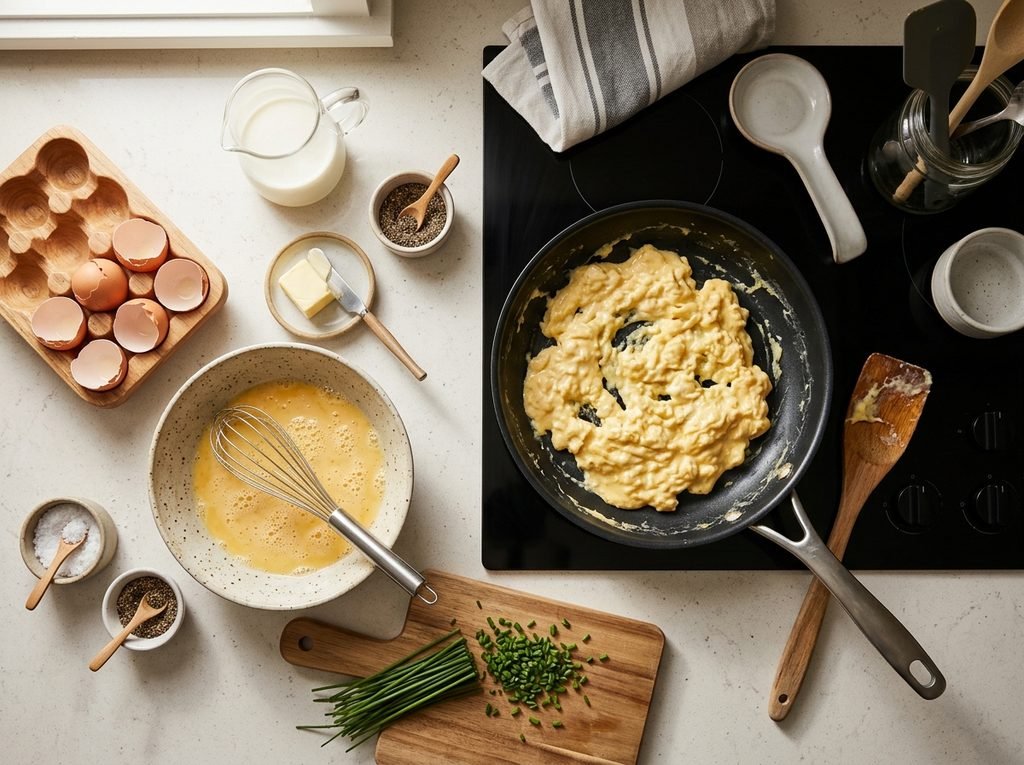
Step 1: Crack the Eggs
Crack the eggs into a medium mixing bowl.
Using a bowl instead of cracking the eggs directly into the skillet gives you better control over the mixture and allows you to properly whisk the eggs before cooking.
Check for any shell fragments and remove them if necessary.
Step 2: Whisk the Eggs
Add the milk or cream, salt, and black pepper to the eggs.
Whisk everything together until the yolks and whites are fully combined and the mixture looks uniform.
Whisking introduces a small amount of air into the eggs, which can contribute to a lighter texture.
However, you do not need to whisk aggressively for a long time. A thorough but controlled whisk is enough.
Step 3: Heat the Skillet
Place a nonstick skillet over medium-low heat.
Add the butter and allow it to melt slowly.
The butter should melt without immediately turning dark or burning. If it starts browning rapidly, the skillet is too hot.
Step 4: Add the Eggs
Pour the whisked egg mixture into the skillet.
Allow the eggs to sit undisturbed for several seconds. Once the edges begin to set, gently move the eggs with a silicone spatula.
Step 5: Create Soft Curds
Slowly push the cooked portions of egg toward the center of the skillet.
Continue moving the eggs gently so that larger soft curds begin to form.
Do not constantly stir the eggs into tiny pieces. Gentle movements create larger, softer curds and help maintain a pleasant texture.
Step 6: Remove From Heat Early
This is one of the most important tips for making excellent scrambled eggs.
Remove the skillet from the heat while the eggs are still slightly glossy and look just a little underdone.
The residual heat from the skillet will continue cooking them for a short time. If you wait until the eggs look completely dry in the pan, they may become overcooked by the time you serve them.
Why Low Heat Works Better
Eggs are delicate and cook quickly. Using high heat may seem like a way to prepare breakfast faster, but it can make the eggs difficult to control.
High heat causes the egg proteins to set quickly, often producing firm, dry curds.
Medium-low heat gives you more time to move the eggs around the skillet and stop cooking at exactly the right moment.
If you are new to making scrambled eggs, gentle heat is one of the easiest ways to improve your results.
Should You Add Milk to Scrambled Eggs?
Milk is optional. A small amount can make scrambled eggs softer and add a little richness, but you do not need milk to make fluffy eggs.
If you use too much milk, however, the mixture can become watery and may take longer to cook.
The same principle applies to cream. A small amount can add richness, but the eggs themselves should remain the main ingredient.
How to Get Creamy Scrambled Eggs
For creamy scrambled eggs, use moderate heat and keep the cooking process gentle.
Stir the eggs slowly rather than aggressively. Remove them from the skillet while they still have a slight glossy appearance.
Adding a small amount of butter toward the end of cooking can also add richness, although this is completely optional.
How to Avoid Dry Scrambled Eggs
Overcooking is the biggest reason scrambled eggs become dry.
Remember that eggs continue cooking from residual heat after you remove them from the skillet. This means you should take them off the heat slightly before they reach your desired final texture.
Another important factor is the skillet temperature. If your eggs cook extremely quickly and become firm within seconds, reduce the heat.
Common Scrambled Egg Mistakes
Cooking Over High Heat
High heat can cause the eggs to become firm and dry before you have time to control their texture.
Overmixing While Cooking
Constantly stirring the eggs into tiny pieces can produce a dry texture. Instead, use slow, deliberate movements to create soft curds.
Adding Too Much Milk
Too much milk can make the eggs watery. A small amount is enough if you choose to use it.
Leaving the Eggs in the Pan Too Long
Remove the eggs while they are still slightly glossy. They will continue cooking from residual heat.
Using an Uncovered Nonstick Pan Without Enough Fat
A small amount of butter helps prevent sticking and adds flavor. Make sure the skillet has a suitable cooking surface for delicate eggs.
How to Make Cheesy Scrambled Eggs
Cheese is an easy way to transform basic scrambled eggs into a richer breakfast.
Cheddar, Monterey Jack, mozzarella, Swiss cheese, and other melting cheeses can work well.
Add shredded cheese toward the end of cooking and gently fold it into the eggs. Remove the skillet from the heat once the cheese begins to melt.
For stronger flavor, try adding a small amount of sharp cheddar. For a milder and creamier result, Monterey Jack is an excellent choice.
Cheesy Scrambled Eggs
Cheese is one of the easiest ways to turn simple scrambled eggs into a richer and more satisfying breakfast.
For the best texture, add shredded cheese when the eggs are almost finished cooking. Gently fold the cheese into the eggs and remove the skillet from the heat once it begins to melt.
Sharp cheddar provides a bold flavor, while Monterey Jack creates a mild and creamy result. You can also try mozzarella, Swiss cheese, or a Mexican-style cheese blend.
Vegetable Scrambled Eggs
Adding vegetables is a simple way to introduce different flavors, colors, and textures to your breakfast.
Bell peppers, onions, spinach, mushrooms, tomatoes, and green onions all work well with scrambled eggs.
For the best results, cook vegetables separately or add them to the skillet before the eggs. This allows excess moisture to evaporate and prevents the finished eggs from becoming watery.
Spinach and Eggs
Fresh spinach cooks quickly and pairs naturally with eggs. Add a handful of spinach to the skillet and cook until it has just wilted before adding the beaten eggs.
Mushroom and Onion Eggs
Sauté sliced mushrooms and onions until tender and lightly browned, then add the egg mixture. The combination creates a savory and satisfying breakfast.
Tomato and Herb Eggs
Diced tomatoes and fresh herbs can give scrambled eggs a lighter, fresher flavor. Add tomatoes in moderation because their water content can make the eggs softer.
Herbs That Taste Great With Scrambled Eggs
Fresh herbs can make a simple plate of scrambled eggs taste much more interesting.
- Chives: Mild onion flavor and a fresh aroma.
- Parsley: Fresh and slightly peppery.
- Cilantro: Bright flavor that works especially well with salsa.
- Dill: Fresh and aromatic.
- Basil: Excellent with tomatoes and cheese.
For the best presentation, sprinkle chopped fresh herbs over the eggs immediately before serving.
What to Serve With Scrambled Eggs
Scrambled eggs are versatile enough to work with almost any breakfast side. A few simple additions can turn them into a complete and satisfying meal.
- Whole-grain or toasted bread
- Fresh fruit
- Avocado slices
- Roasted potatoes
- Breakfast sausage
- Turkey bacon
- Fresh tomatoes
- Sautéed vegetables
- Hash browns
For a simple weekday breakfast, serve the eggs with toast and fruit. For a larger weekend breakfast, combine them with roasted potatoes, avocado, and your favorite breakfast protein.
How to Make Scrambled Eggs for a Crowd
If you are preparing breakfast for several people, scrambled eggs can easily be made in a larger skillet.
Whisk the eggs in a large bowl before cooking. Use a large nonstick skillet so the eggs have enough room to cook evenly.
Cook over medium-low heat and gently move the eggs across the skillet as they set. Avoid cooking a very large quantity in a small pan because the eggs may cook unevenly.
Once the eggs are nearly finished, remove them from the heat and transfer them to a serving dish. Remember that residual heat will continue cooking them slightly.
How to Keep Scrambled Eggs Warm
Scrambled eggs are best when served immediately, but sometimes you need to keep them warm for a short period.
Transfer the cooked eggs to a warm serving dish and cover them loosely. Avoid holding them over high heat for a long time because they can continue cooking and become dry.
If you are serving a large breakfast buffet, prepare the eggs as close to serving time as possible for the best texture.
Can You Prepare Scrambled Eggs Ahead of Time?
Scrambled eggs are best when freshly cooked, but they can be prepared ahead of time if necessary.
Store cooked eggs in an airtight container in the refrigerator and reheat them gently. Keep in mind that reheated eggs may not have exactly the same soft texture as freshly cooked eggs.
For the best quality, prepare scrambled eggs shortly before serving whenever possible.
How to Make Scrambled Eggs Creamier
If you prefer especially creamy scrambled eggs, focus on gentle cooking rather than adding large amounts of dairy.
Use medium-low heat and stir slowly. Remove the eggs from the skillet while they still have a slightly glossy appearance.
A small amount of butter can also add richness. Some cooks prefer adding a spoonful of cream cheese or another soft cheese near the end of cooking for an extra-creamy variation.
How to Make Scrambled Eggs Without Milk
You do not need milk to make delicious scrambled eggs. Simply whisk the eggs with salt and pepper and cook them gently in butter.
In fact, eggs cooked without added milk can have a more concentrated egg flavor and a naturally rich texture.
If you want softer eggs without dairy, focus on lower heat and remove the eggs from the skillet before they become completely firm.
Healthy Ways to Serve Scrambled Eggs
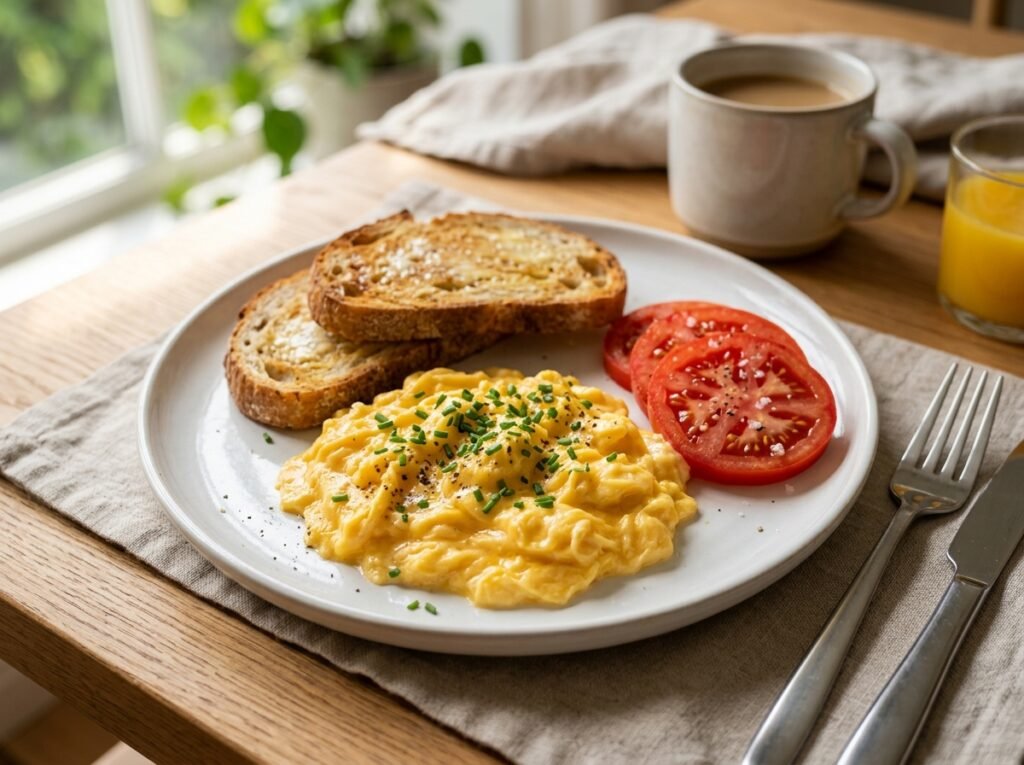
Scrambled eggs can easily be incorporated into a balanced breakfast.
Serve them with vegetables, fresh fruit, whole-grain toast, or avocado. Adding vegetables such as spinach, peppers, mushrooms, or tomatoes can also provide additional variety and texture.
If you are watching your overall calorie intake, use a moderate amount of butter and cheese while increasing vegetables and other nutrient-dense sides.
Frequently Asked Questions
How Many Eggs Should I Use Per Person?
Two large eggs per person is a useful starting point for a standard breakfast serving. You can adjust the amount depending on appetite and what other foods you are serving.
Should I Add Milk or Water to Scrambled Eggs?
Either can be used in small amounts, but neither is required. A little milk can add richness, while water can create lighter eggs. The cooking technique has a greater impact on texture than adding a large amount of liquid.
What Temperature Is Best for Scrambled Eggs?
Medium-low heat is generally a good choice. Gentle heat gives you more control and helps prevent the eggs from becoming dry or rubbery.
When Should I Add Salt?
You can season the eggs before cooking or shortly before they finish. The important thing is to use an appropriate amount so the natural flavor of the eggs remains balanced.
Why Do My Scrambled Eggs Become Watery?
Watery eggs can result from adding too much liquid, cooking vegetables with excess moisture, or cooking the eggs improperly. Use only a small amount of milk if desired and cook watery vegetables before adding the eggs.
Why Are My Scrambled Eggs Rubbery?
Overcooking is the most common reason. High heat can also make the proteins tighten quickly. Cook gently and remove the eggs from the heat while they are still slightly glossy.
Can I Add Cheese to Scrambled Eggs?
Yes. Cheddar, Monterey Jack, mozzarella, Swiss cheese, and other melting cheeses work well. Add cheese near the end of cooking for the best texture.
Final Tips for Perfect Scrambled Eggs
Perfect scrambled eggs do not require complicated techniques. The key is to keep the cooking process gentle and pay attention to the texture as the eggs cook.
- Use fresh large eggs when possible.
- Whisk the eggs thoroughly before cooking.
- Use medium-low heat.
- Cook the eggs in butter for extra flavor.
- Move the eggs gently to create soft curds.
- Avoid overmixing while they cook.
- Remove the eggs from the heat while they still look slightly glossy.
- Serve immediately for the best texture.
Once you become comfortable with the basic technique, scrambled eggs can become one of the easiest and most versatile breakfasts in your kitchen. You can keep them simple with butter, salt, and pepper or transform them with cheese, vegetables, herbs, and flavorful toppings.
Final Thoughts
Fluffy scrambled eggs are a perfect example of how simple ingredients can create an excellent meal when the cooking technique is right. The secret is not complicated: use moderate heat, avoid overcooking, and give the eggs enough attention while they cook.
Whether you serve them with toast and fruit for a quick weekday breakfast or pair them with potatoes, vegetables, and sausage for a weekend brunch, these scrambled eggs are easy to customize and enjoy.
With a little practice, you will quickly learn exactly when your eggs are ready to leave the skillet. Once you do, you can confidently prepare soft, fluffy, flavorful scrambled eggs whenever you want a quick homemade breakfast.
Recipe Summary
- Prep Time: 5 minutes
- Cook Time: 5 minutes
- Total Time: 10 minutes
- Servings: 2
- Recipe Type: Breakfast
- Difficulty: Easy