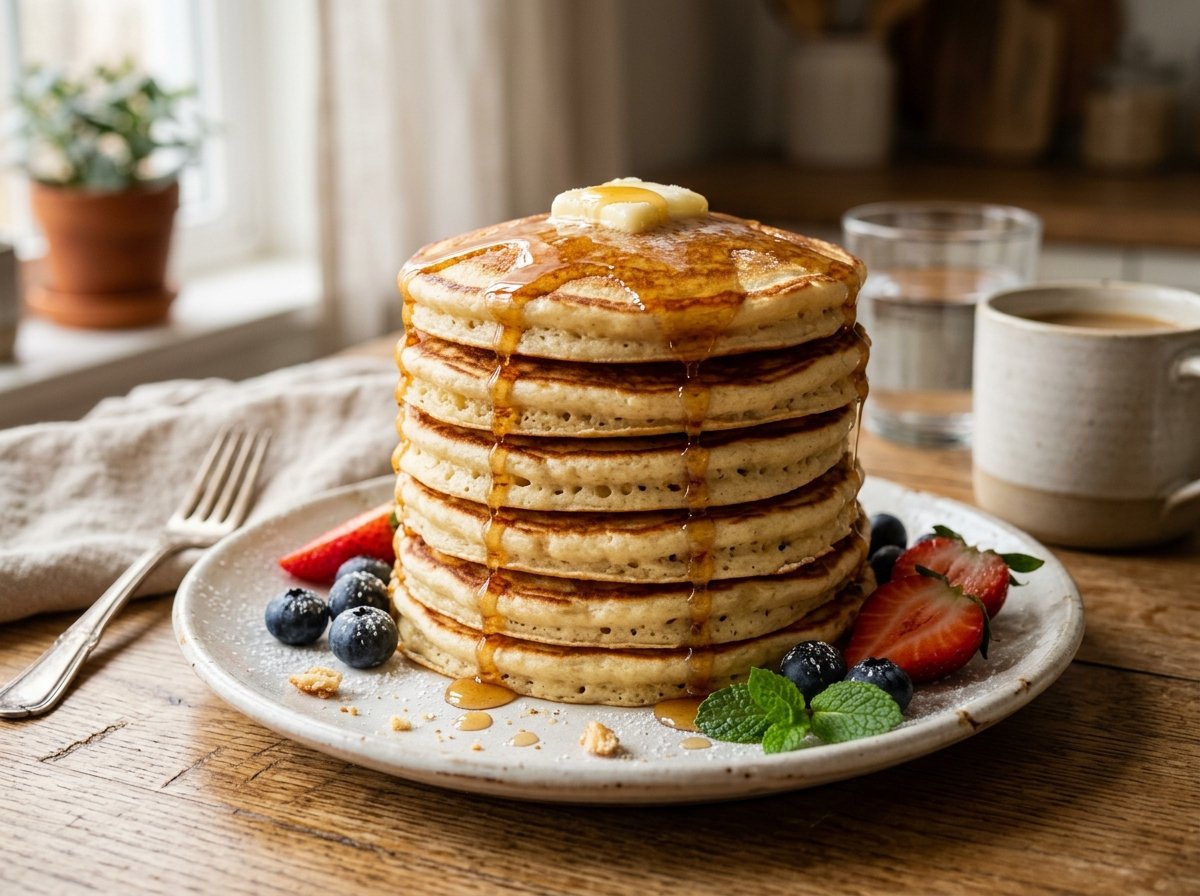
Easy Homemade Pancakes: A Fluffy Breakfast Recipe
There is nothing quite like starting the morning with a warm stack of homemade pancakes. Soft, fluffy, lightly golden, and finished with a drizzle of maple syrup, pancakes are one of those classic breakfast foods that can make an ordinary morning feel special.
The best thing about making pancakes at home is that you do not need complicated ingredients or advanced cooking skills. With a few everyday ingredients and the right technique, you can prepare delicious pancakes from scratch in your own kitchen.
This easy homemade pancake recipe is perfect for beginners, busy families, weekend breakfasts, and relaxed brunches. The batter comes together quickly, and you can customize the pancakes with fresh fruit, chocolate chips, nuts, cinnamon, or your favorite toppings.
In this guide, you will learn how to make fluffy homemade pancakes step by step, how to get the perfect texture, which common mistakes to avoid, and how to serve and store your pancakes.
Why You’ll Love These Homemade Pancakes
Homemade pancakes are simple, comforting, and incredibly versatile. Once you learn the basic recipe, you can easily change the flavors and toppings to create a different breakfast whenever you want.
- Easy to prepare: The batter requires only a few basic ingredients.
- Quick breakfast: You can prepare and cook the pancakes in a short amount of time.
- Light and fluffy: The right mixing and cooking techniques create a soft texture.
- Customizable: Add fruit, chocolate chips, nuts, spices, or other favorite ingredients.
- Family-friendly: Kids and adults alike can enjoy a warm stack of homemade pancakes.
- Budget-friendly: Most of the ingredients are affordable pantry staples.
Ingredients You’ll Need
One of the reasons this recipe is so convenient is that you probably already have most of the ingredients in your kitchen.
All-Purpose Flour
All-purpose flour provides the main structure for the pancakes. For the best results, measure your flour carefully. Too much flour can make the pancakes dense, while too little can make the batter difficult to handle.
Baking Powder
Baking powder is responsible for helping the pancakes rise as they cook. It creates tiny air bubbles in the batter, which contributes to the light and fluffy texture.
Granulated Sugar
A small amount of sugar adds a pleasant sweetness to the pancakes. It also helps the outside of the pancakes develop a beautiful golden-brown color during cooking.
Salt
Salt may seem like a minor ingredient, but it plays an important role in balancing the sweetness and enhancing the overall flavor of the pancakes.
Milk
Milk provides the liquid needed to create the batter. Whole milk produces a rich and tender pancake, but you can use another type of milk if that is what you have available.
Egg
An egg helps hold the ingredients together while adding richness and structure to the pancakes. It also contributes to a soft and tender texture.
Butter
Melted butter adds richness and flavor to the batter. You can also use a small amount of butter to lightly grease the skillet before cooking.
Vanilla Extract
Vanilla extract is optional, but adding a small amount gives the pancakes a warm, pleasant aroma and makes their flavor even more delicious.
Simple Homemade Pancake Recipe
Ingredients
- 1 1/2 cups all-purpose flour
- 2 teaspoons baking powder
- 2 tablespoons granulated sugar
- 1/2 teaspoon salt
- 1 1/4 cups milk
- 1 large egg
- 2 tablespoons melted butter
- 1 teaspoon vanilla extract
- Additional butter for cooking
How to Make Homemade Pancakes
Step 1: Prepare the Dry Ingredients
Start by adding the all-purpose flour, baking powder, sugar, and salt to a large mixing bowl.
Whisk the dry ingredients together until they are evenly combined. This helps distribute the baking powder throughout the flour so the pancakes can rise evenly while cooking.
Step 2: Prepare the Wet Ingredients
In a separate bowl, whisk together the milk, egg, melted butter, and vanilla extract.
If your melted butter is very hot, allow it to cool slightly before adding it to the egg and milk mixture. Extremely hot butter can affect the egg and may create an uneven mixture.
Step 3: Combine the Mixtures
Slowly pour the wet ingredients into the bowl containing the dry ingredients.
Use a whisk or spatula to gently combine everything. Mix only until the ingredients are incorporated.
Do not worry if the batter has a few small lumps. In fact, slightly lumpy batter is often better than completely smooth batter because overmixing can produce pancakes that are tough instead of fluffy.
Step 4: Let the Batter Rest
Allow the pancake batter to rest for about 5 minutes before cooking.
This short resting period gives the flour time to absorb the liquid and allows the batter to settle. You do not need to leave the batter for a long time; a few minutes is enough.
Choosing the Right Pan
A nonstick skillet or flat griddle is ideal for making pancakes. A good cooking surface makes it easier to flip the pancakes and helps prevent them from sticking.
If you are using a skillet, choose one that gives you enough room to cook several pancakes without crowding them together.
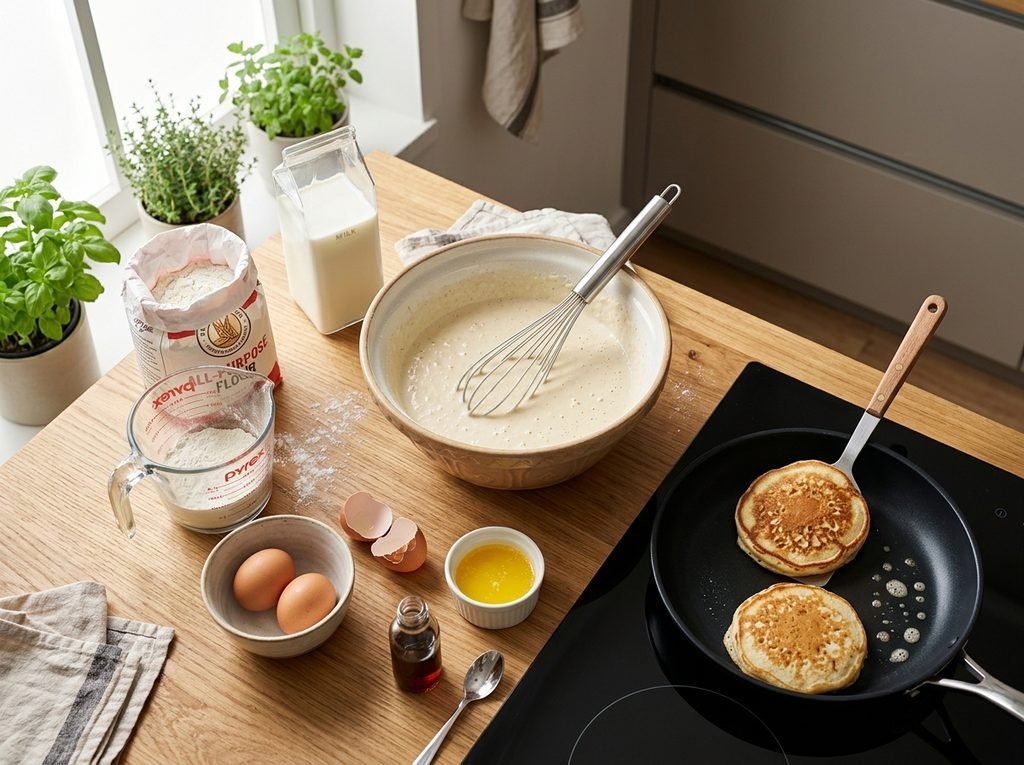
How to Get the Pan Ready
Place the skillet over medium heat and allow it to warm up gradually.
Once the pan is hot, add a small amount of butter and spread it across the cooking surface. You only need a thin layer because too much butter can cause the pancakes to cook unevenly.
A properly heated skillet is important. If the pan is too cold, the pancakes may spread too much and take longer to cook. If it is too hot, the outside may brown before the center has finished cooking.
Cooking the Pancakes
Pour a small amount of batter onto the hot skillet. For medium-sized pancakes, use approximately 1/4 cup of batter per pancake.
Leave enough space between the pancakes so you can easily slide a spatula underneath them.
Cook the pancake until bubbles begin to appear across the surface and the edges look slightly set. This usually indicates that the first side is ready to flip.
Carefully slide a spatula underneath the pancake and flip it in one smooth motion.
Cook the second side until it is golden brown and the center is fully cooked. Transfer the finished pancake to a plate and continue with the remaining batter.
The Most Important Rule: Don’t Overmix
If you want light and fluffy pancakes, one of the most important things to remember is to avoid overmixing the batter.
When flour is mixed with liquid, gluten begins to develop. A little gluten is necessary for structure, but excessive mixing can make the pancakes chewy, dense, or rubbery.
For this reason, stop mixing as soon as the dry and wet ingredients are combined. A few small lumps are perfectly acceptable and will usually disappear during cooking.
How to Know When a Pancake Is Ready to Flip
Knowing when to flip your pancake can make a significant difference in the final result.
Look for several signs:
- Bubbles begin appearing on the surface.
- Some of the bubbles start to pop.
- The edges become slightly firm.
- The underside has developed a golden-brown color.
Once you see these signs, gently flip the pancake. Avoid flipping it repeatedly because unnecessary movement can interfere with even cooking.
Tips for Extra-Fluffy Pancakes
Use Fresh Baking Powder
Old baking powder may not produce enough lift. If your pancakes consistently turn out flat despite following the recipe, check the freshness of your baking powder.
Keep the Heat Moderate
Medium heat generally works best. Pancakes need enough time to cook through while developing a golden surface.
Don’t Flatten the Pancakes
After flipping a pancake, resist the temptation to press it down with your spatula. Pressing can remove some of the air and result in a flatter, denser pancake.
Don’t Crowd the Pan
Give each pancake enough room to spread slightly and make flipping easier. Cooking too many pancakes at once can make the process more difficult.
Cook the Batter in Batches
If you are preparing a large breakfast, cook the pancakes in batches rather than trying to fit everything into one skillet.
Delicious Pancake Toppings
One of the best things about homemade pancakes is how easy they are to customize. A simple pancake can become a completely different breakfast depending on the toppings you choose.
Classic Butter and Maple Syrup
For a traditional breakfast, place a small pat of butter on top of a warm stack of pancakes and drizzle with pure maple syrup. The butter slowly melts into the pancakes while the syrup adds sweetness.
Fresh Berries
Strawberries, blueberries, raspberries, and blackberries are excellent pancake toppings. Their natural sweetness and slight tartness balance the richness of the pancakes.
Banana and Peanut Butter
Slice a ripe banana over the pancakes and add a spoonful of creamy or crunchy peanut butter. This combination creates a satisfying breakfast with a delicious balance of sweet and nutty flavors.
Chocolate Chips
For a more indulgent breakfast, sprinkle chocolate chips over your pancakes. You can add them directly to the batter while cooking or place them on top after the pancakes are finished.
Whipped Cream and Fruit
For a weekend brunch-style presentation, serve the pancakes with a little whipped cream and fresh fruit. This simple combination looks beautiful and tastes even better.
Easy Pancake Variations
Once you have mastered the basic pancake recipe, you can experiment with different flavors and ingredients.
Blueberry Pancakes
Fresh or frozen blueberries can be added to the batter for naturally sweet and colorful pancakes. If using frozen blueberries, there is no need to thaw them first.
Banana Pancakes
Mash one ripe banana and gently fold it into the batter. Banana adds natural sweetness and creates a soft texture.
Cinnamon Pancakes
Add a small amount of ground cinnamon to the dry ingredients for a warm and comforting flavor. Cinnamon pancakes pair especially well with sliced apples and maple syrup.
Chocolate Chip Pancakes
Fold a handful of chocolate chips into the batter just before cooking. Use small chocolate chips if you want them distributed more evenly throughout each pancake.
Nutty Pancakes
Chopped walnuts or pecans can add a pleasant crunch. For the best texture, sprinkle the nuts into the batter just before cooking rather than mixing them aggressively.
What to Serve With Pancakes
Pancakes can be served on their own, but adding a few sides can turn them into a complete breakfast.
- Fresh seasonal fruit
- Greek yogurt
- Scrambled or fried eggs
- Turkey or breakfast sausage
- Crispy breakfast potatoes
- Fresh berries
- Maple syrup
- Peanut or almond butter
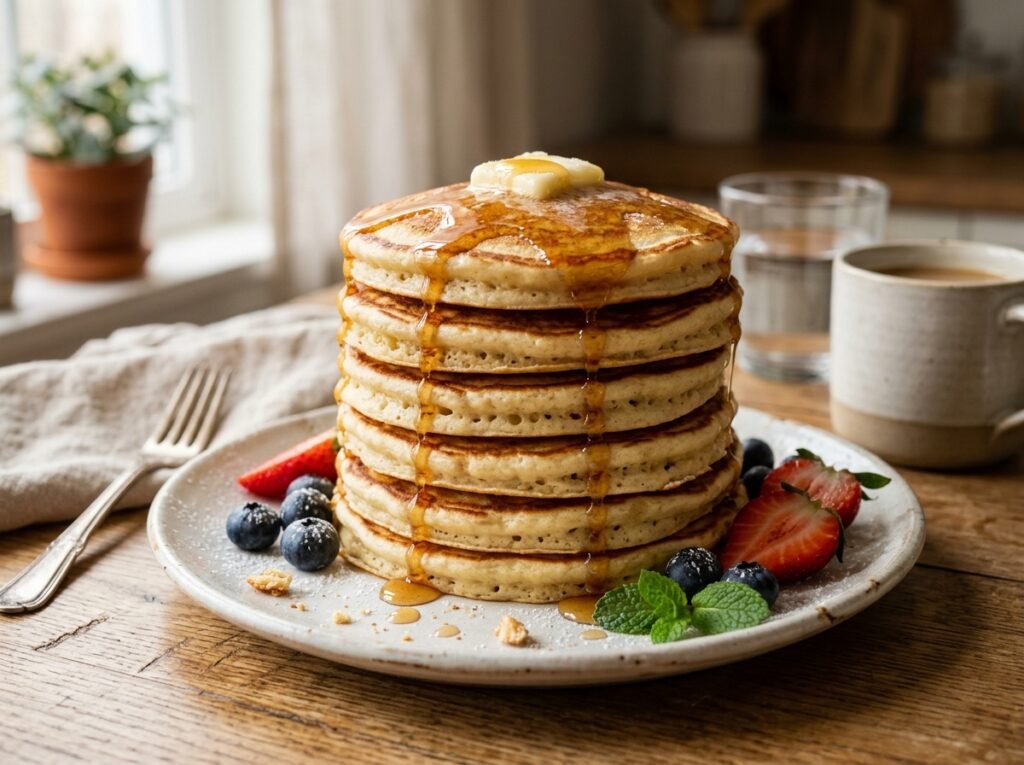
If you are preparing breakfast for guests, you can create a small pancake topping station. Put maple syrup, fresh fruit, whipped cream, nuts, and chocolate chips into separate bowls so everyone can build their own stack.
How to Keep Pancakes Warm
If you are making a large batch, you may need to keep the finished pancakes warm while you cook the remaining batter.
Place the cooked pancakes on a heat-safe plate and keep them in a low-temperature oven. Avoid using excessive heat because the pancakes can become dry.
Another option is to cover the pancakes loosely with foil for a short period. Do not leave them covered for too long because trapped steam can make the surface slightly damp.
How to Store Leftover Pancakes
If you have leftover pancakes, allow them to cool before storing them.
Place the pancakes in an airtight container or sealable food-storage bag. Refrigerated pancakes can be reheated later for a quick breakfast.
For longer storage, pancakes can also be frozen. Separate individual pancakes with pieces of parchment paper before placing them in a freezer-safe container or bag. This makes it easy to remove only the amount you need.
How to Reheat Pancakes
There are several convenient ways to reheat homemade pancakes.
Microwave
Place one or two pancakes on a microwave-safe plate and heat them for a short period until warmed through. Be careful not to overheat them, as they can become dry.
Skillet
Warm the pancakes in a lightly heated skillet for a few minutes. This method can help bring back some of the texture of freshly cooked pancakes.
Toaster
For frozen pancakes, a toaster can be a convenient option. Toast them until heated through and lightly crisp around the edges.
Common Pancake Problems and How to Fix Them
Why Are My Pancakes Flat?
Flat pancakes can be caused by old baking powder, overly thin batter, or insufficient cooking time. Make sure your baking powder is fresh and follow the ingredient measurements carefully.
Why Are My Pancakes Dense?
The most common reason is overmixing the batter. Mix gently and stop as soon as the dry and wet ingredients are combined.
Why Are My Pancakes Burning?
Your skillet may be too hot. Reduce the heat to medium or medium-low and allow the pan to cool slightly before continuing.
Why Are My Pancakes Raw in the Middle?
This usually happens when the heat is too high or the pancakes are too thick. Lower the heat and use a consistent amount of batter for each pancake.
Why Are My Pancakes Sticking to the Pan?
Make sure your cooking surface is properly heated and lightly greased. A quality nonstick skillet can also make flipping much easier.
Tips for Making Pancakes Ahead of Time
If you want to make breakfast easier on a busy morning, pancakes can be prepared ahead of time.
Cook the pancakes according to the recipe, allow them to cool, and store them in the refrigerator or freezer. When you are ready to eat, simply reheat the desired number of pancakes.
This is particularly useful for families because you can prepare a large batch during the weekend and have an easy breakfast option available during the week.
Frequently Asked Questions
Can I Make Pancake Batter Ahead of Time?
It is generally best to cook pancakes soon after preparing the batter because the leavening ingredients work as the batter sits. For the best texture, prepare and cook the batter relatively soon after mixing.
Can I Use Whole Wheat Flour?
Yes. You can replace some of the all-purpose flour with whole wheat flour. Keep in mind that using a large amount of whole wheat flour may produce a denser pancake.
Can I Make Pancakes Without Vanilla?
Absolutely. Vanilla extract is optional. The pancakes will still be delicious without it.
Can I Make These Pancakes Without Butter?
You can use a neutral cooking oil instead of butter if preferred. The flavor will be slightly different, but the pancakes can still turn out well.
How Do I Make Pancakes the Same Size?
Use the same measuring cup or ladle for every pancake. This helps you control the amount of batter and makes the pancakes cook more evenly.
Final Tips for Perfect Homemade Pancakes
Making fluffy pancakes at home is mostly about paying attention to a few simple details. Measure your ingredients carefully, avoid overmixing, use fresh baking powder, and cook over moderate heat.
Most importantly, do not worry if your first few pancakes are not perfect. Pancake-making often becomes easier after a little practice because you learn how your skillet heats and how quickly your particular batter cooks.
Once you have mastered this basic recipe, you can start experimenting with different flavors and toppings. Try blueberries for a fresh twist, bananas for natural sweetness, chocolate chips for an indulgent breakfast, or cinnamon and apples for a cozy weekend meal.
With simple ingredients and a few minutes of preparation, homemade pancakes can become a dependable breakfast recipe that you return to again and again.
Recipe Summary
- Prep Time: 10 minutes
- Cook Time: 15 minutes
- Total Time: 25 minutes
- Servings: Approximately 4
- Recipe Type: Breakfast
- Cuisine: American-inspired