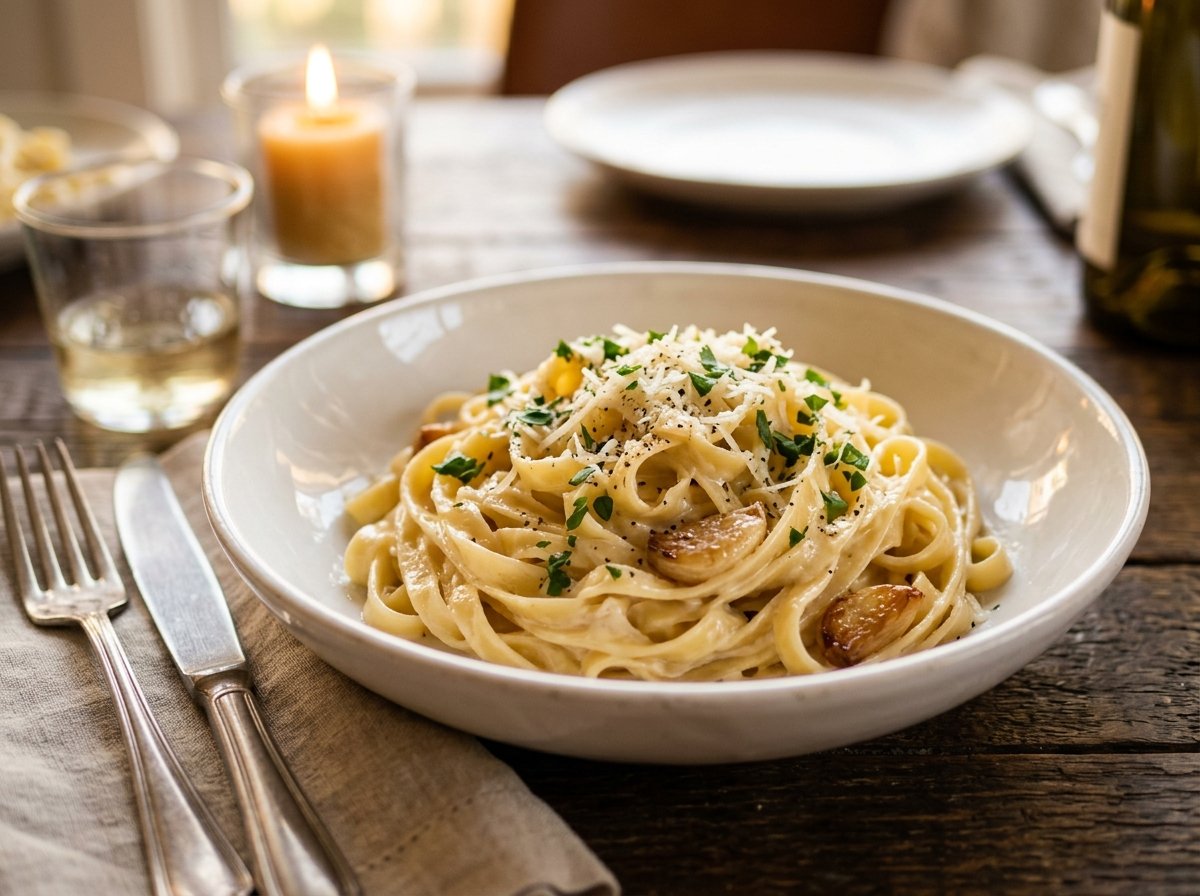
Creamy Garlic Parmesan Pasta: An Easy Dinner Recipe
When you want a comforting homemade dinner without spending hours in the kitchen, creamy garlic Parmesan pasta is an excellent choice. This simple pasta combines tender noodles with a rich, silky sauce made from butter, fresh garlic, cream, and Parmesan cheese. The result is a flavorful meal that tastes restaurant-worthy while using ingredients that are easy to find.
This recipe is especially useful for busy weeknights. It comes together quickly, requires only a handful of ingredients, and can be served as a main course or paired with chicken, shrimp, roasted vegetables, or a fresh salad.
The secret to great creamy garlic Parmesan pasta is creating a smooth sauce without making it overly heavy. Fresh garlic provides a fragrant base, butter adds richness, Parmesan delivers savory depth, and reserved pasta water helps create a silky sauce that clings beautifully to every strand of pasta.
Why You’ll Love This Creamy Garlic Parmesan Pasta
This pasta recipe is simple enough for beginners but delivers plenty of flavor. It is also easy to customize depending on what you have available in your kitchen.
- Ready in about 25 minutes
- Uses simple everyday ingredients
- Rich, creamy, and flavorful
- Perfect for busy weeknight dinners
- Easy to customize with vegetables or protein
- Works with several pasta shapes
- Great comfort food for the whole family
- Requires minimal preparation
Ingredients You’ll Need
You only need a few basic ingredients to create this creamy garlic Parmesan sauce.
For the Pasta
- 12 ounces spaghetti, fettuccine, linguine, or penne
- Salt, for the pasta water
For the Garlic Parmesan Sauce
- 3 tablespoons unsalted butter
- 5 cloves fresh garlic, finely minced
- 1 cup heavy cream
- 3/4 cup freshly grated Parmesan cheese
- 1/2 cup reserved pasta water
- 1/2 teaspoon Italian seasoning
- 1/4 teaspoon black pepper
- 1 tablespoon chopped fresh parsley
- Optional: 1/4 teaspoon red pepper flakes
Choosing the Best Pasta
You can prepare this recipe with almost any pasta shape, but long pasta such as spaghetti, fettuccine, and linguine works particularly well with a creamy sauce.
Fettuccine provides a wide surface that holds plenty of sauce, while spaghetti offers a lighter texture. Penne and rigatoni are excellent choices if you prefer pasta shapes that trap sauce inside.
Whichever pasta you choose, cook it until al dente. Slightly firm pasta provides better texture and holds together well when tossed with the hot sauce.
How to Make Creamy Garlic Parmesan Pasta
Step 1: Boil the Water
Fill a large pot with water and bring it to a rolling boil over high heat. Once the water is boiling, add a generous amount of salt.
Salting the pasta water is important because it seasons the pasta from the inside as it cooks. Do not be afraid of properly salted water; most of it will be drained later.
Step 2: Cook the Pasta
Add the pasta to the boiling water and cook according to the package directions. Stir occasionally to prevent the noodles from sticking together.
Cook the pasta until it is al dente. Before draining, carefully reserve approximately 1 cup of pasta water.
Drain the pasta, but do not rinse it. The starch remaining on the pasta helps the creamy sauce adhere to the noodles.
Why Reserved Pasta Water Matters
Reserved pasta water is one of the most useful ingredients in creamy pasta recipes. It contains starch released from the noodles during cooking, which helps emulsify the butter, cream, cheese, and other ingredients.
Adding a small amount of pasta water can make the sauce smoother and help it coat the pasta evenly. It also gives you control over the final consistency.
Always reserve more than you think you will need. You can add it gradually, but you cannot recover it once it has gone down the drain.
Step 3: Melt the Butter
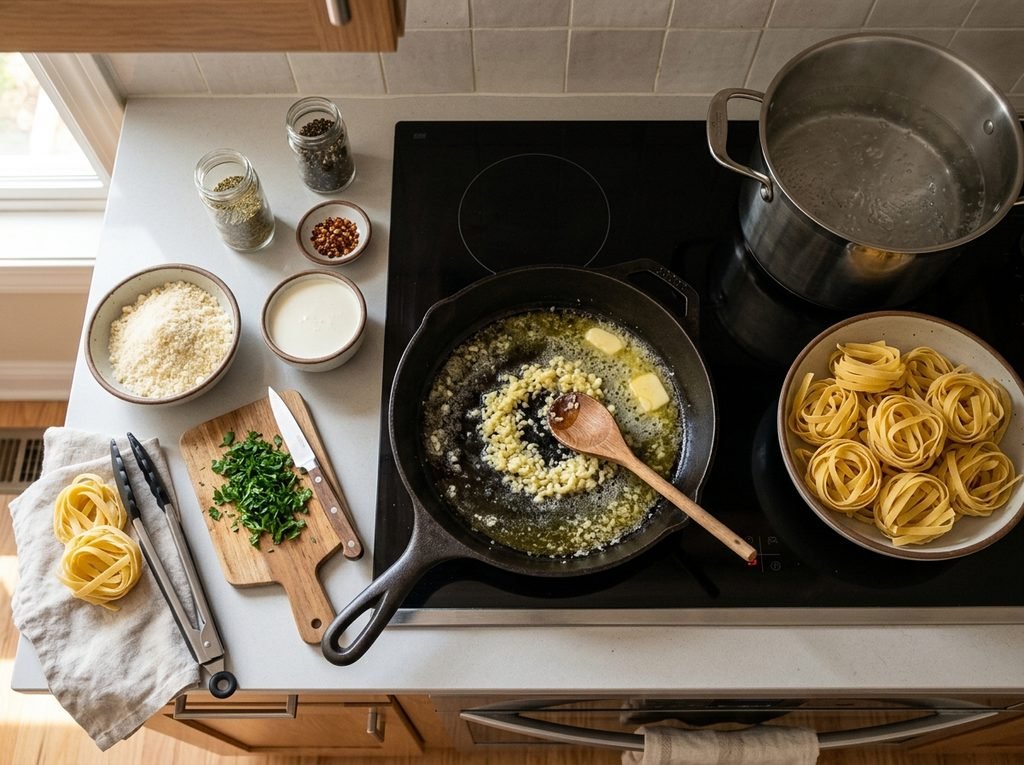
While the pasta is cooking, place a large skillet over medium heat. Add the butter and allow it to melt completely.
Keep the heat moderate. Butter can burn quickly if the skillet becomes excessively hot.
Step 4: Sauté the Garlic
Add the minced garlic to the melted butter. Cook for approximately 30 to 60 seconds, stirring frequently.
The garlic should become fragrant without becoming dark brown. Fresh garlic cooks quickly, and burnt garlic can make the entire sauce taste bitter.
Step 5: Add the Heavy Cream
Reduce the heat to medium-low and slowly pour the heavy cream into the skillet. Stir continuously until the butter and cream are well combined.
Add Italian seasoning and black pepper. Allow the sauce to simmer gently for approximately 2 to 3 minutes.
Avoid a vigorous boil. Gentle heat helps maintain a smooth and creamy consistency.
Step 6: Add Parmesan Cheese
Gradually sprinkle the freshly grated Parmesan cheese into the warm cream sauce while stirring continuously.
Continue stirring until the cheese melts completely and the sauce becomes smooth and slightly thickened.
Freshly grated Parmesan is strongly recommended because it generally melts more smoothly than packaged shredded cheese.
How to Prevent Parmesan from Clumping
One of the most common problems when making creamy Parmesan pasta is cheese that becomes stringy or clumps together. The easiest way to avoid this is to control the temperature.
Do not add Parmesan to an aggressively boiling sauce. Reduce the heat and allow the cream to become hot but not violently bubbling.
Add the cheese gradually while stirring. This allows each addition to melt before you add more.
Freshly grated Parmesan also tends to incorporate better than pre-shredded cheese.
Step 7: Combine the Pasta and Sauce
Add the drained pasta directly to the skillet containing the creamy garlic Parmesan sauce.
Use tongs to toss the pasta continuously until every strand or piece is coated with the sauce.
If the sauce seems too thick, add reserved pasta water one tablespoon at a time. Continue tossing until the sauce reaches a smooth, silky consistency.
Step 8: Finish the Pasta
Add chopped fresh parsley and taste the pasta. Adjust the salt and black pepper if necessary.
If you enjoy a little heat, sprinkle in red pepper flakes. You can also add a small amount of freshly grated Parmesan over the top before serving.
How to Make the Sauce Extra Silky
The texture of the sauce is just as important as its flavor. Keep the heat relatively low after adding the cream and cheese, and avoid cooking the sauce for longer than necessary.
When combining the pasta and sauce, toss continuously. The movement helps distribute the sauce evenly and encourages the starch from the pasta water to combine with the fats and cream.
If the sauce becomes too thick, add pasta water gradually. If it is too thin, allow it to simmer gently for another minute before adding more cheese.
Common Mistakes to Avoid
Burning the Garlic
Garlic should become fragrant and lightly softened, not dark brown. Burnt garlic can introduce an unpleasant bitter flavor.
Using Excessive Heat
A high temperature can cause cream sauces to become unstable. Medium-low heat is usually sufficient once the cream has been added.
Adding Parmesan Too Quickly
Gradually add Parmesan while stirring. Dumping all the cheese into a very hot sauce at once can cause it to clump.
Forgetting to Reserve Pasta Water
Pasta water provides both moisture and starch, making it much easier to adjust the sauce.
Overcooking the Pasta
Very soft pasta can become mushy when tossed with hot sauce. Cook it until al dente for the best texture.
Easy Flavor Variations
The basic garlic Parmesan sauce is incredibly versatile. You can change the recipe without changing its fundamental preparation method.
Spicy Garlic Parmesan Pasta
Add red pepper flakes to the garlic and butter for a gentle spicy kick. You can increase the amount if you prefer stronger heat.
Lemon Garlic Parmesan Pasta
Add a teaspoon or two of fresh lemon juice and a little lemon zest to brighten the sauce. The citrus helps balance the richness of the cream and butter.
Herb Parmesan Pasta
Add fresh parsley, basil, thyme, or oregano just before serving. Fresh herbs provide a bright contrast to the rich sauce.
Mushroom Garlic Parmesan Pasta
Sauté sliced mushrooms in the skillet before preparing the sauce. Cook them until golden brown and then continue with the garlic, butter, and cream.
With a few simple ingredients and careful attention to heat, you can create a smooth, creamy garlic Parmesan pasta that is perfect for an easy homemade dinner.
What to Serve with Creamy Garlic Parmesan Pasta
This creamy pasta is satisfying on its own, but a few simple side dishes can turn it into a complete dinner. Since the sauce is rich, fresh vegetables and light salads make excellent pairings.
Garlic Bread
Crispy garlic bread is a classic companion for creamy pasta. It is perfect for soaking up any extra Parmesan sauce left on the plate.
Fresh Green Salad
A simple salad with lettuce, cucumber, tomatoes, and a light lemon dressing adds freshness and balances the richness of the creamy sauce.
Roasted Vegetables
Roasted broccoli, asparagus, zucchini, bell peppers, or green beans add color, texture, and a slightly caramelized flavor that works beautifully with garlic Parmesan pasta.
How to Add Chicken
If you want to turn this simple pasta into a more filling meal, add cooked chicken. Season boneless, skinless chicken breast with salt, pepper, paprika, and Italian seasoning.
Cook the chicken in a skillet until golden brown and fully cooked. Slice it into bite-sized pieces and toss it with the finished pasta.
You can also use leftover roasted chicken or grilled chicken to save preparation time.
How to Make Garlic Parmesan Shrimp Pasta
Shrimp is another excellent addition to this creamy pasta. Season peeled and deveined shrimp with salt, black pepper, paprika, and a little garlic powder.
Cook the shrimp in a hot skillet with a small amount of butter or olive oil for approximately 2 to 3 minutes per side, depending on their size. Remove them from the pan and prepare the garlic Parmesan sauce in the same skillet.
Return the shrimp to the finished pasta just before serving. A little fresh lemon juice and parsley pair particularly well with the shrimp.
Creamy Garlic Mushroom Pasta
For a satisfying vegetarian version, add mushrooms. Slice approximately 8 ounces of mushrooms and sauté them in butter or olive oil until their moisture has evaporated and the edges are golden brown.
Add the garlic and continue with the creamy Parmesan sauce. Toss the cooked pasta into the skillet and finish with fresh parsley.
The mushrooms provide a savory, hearty texture that makes the dish satisfying even without meat.
How to Add Spinach
Fresh spinach is one of the easiest vegetables to add. Once the cream sauce is nearly finished, add two large handfuls of fresh spinach.
Stir for one to two minutes until the leaves wilt. Add the cooked pasta and toss everything together.
For extra flavor, finish the dish with freshly grated Parmesan and a small amount of black pepper.
Lemon Garlic Parmesan Pasta
If you prefer a brighter flavor, turn the recipe into lemon garlic Parmesan pasta. Add approximately one to two teaspoons of fresh lemon juice to the finished sauce.
You can also add a small amount of finely grated lemon zest. The citrus cuts through the richness of the cream and butter and gives the pasta a fresher flavor.
Spicy Garlic Parmesan Pasta
For a spicy variation, add red pepper flakes to the butter and garlic while preparing the sauce.
You can also add a pinch of cayenne pepper or chili powder. Start with a small amount and increase gradually until the pasta reaches your preferred level of heat.
How to Make the Pasta More Flavorful
Seasoning each component properly is the easiest way to create flavorful pasta. Start by salting the cooking water so the noodles are seasoned throughout.
Use fresh garlic instead of relying entirely on garlic powder. Freshly grated Parmesan also provides significantly more flavor and a better texture.
Fresh parsley, black pepper, lemon zest, and a small amount of red pepper flakes can be used at the end to add additional layers of flavor.
How to Store Leftover Creamy Pasta
Allow leftover pasta to cool slightly before transferring it to an airtight container. Refrigerate it promptly and consume it within 3 to 4 days.
The sauce will naturally become thicker after refrigeration. This does not mean the pasta has gone bad; it simply needs a little moisture when reheated.
How to Reheat Creamy Garlic Parmesan Pasta
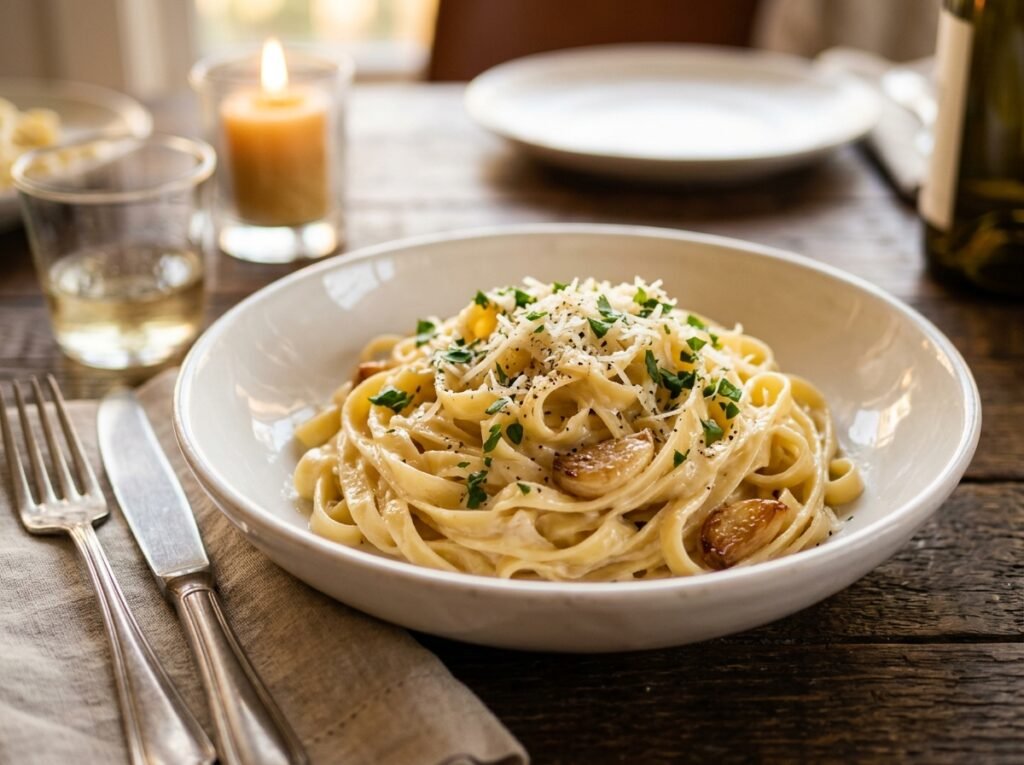
The stovetop is one of the best ways to reheat creamy pasta. Place the leftovers in a skillet over low to medium-low heat.
Add a small splash of milk, cream, chicken broth, or reserved water and stir gently. Continue heating until the pasta is warmed through and the sauce becomes creamy again.
If using a microwave, place the pasta in a microwave-safe bowl and add a small amount of milk or broth. Cover loosely and heat in short intervals, stirring between each interval.
Can You Freeze Creamy Garlic Parmesan Pasta?
You can freeze creamy pasta, although cream-based sauces may change slightly in texture after thawing. For the best result, freeze individual portions in airtight freezer-safe containers.
Allow the pasta to cool completely before freezing. Thaw it overnight in the refrigerator and reheat gently on the stovetop.
Add a small amount of cream or milk during reheating and stir continuously to help restore the sauce’s creamy texture.
Easy Meal Prep Idea
This recipe can be turned into a convenient meal-prep lunch or dinner. Prepare the pasta and sauce, then divide the finished dish into individual containers.
Add grilled chicken, roasted broccoli, spinach, or mushrooms to create a more complete meal.
When ready to eat, reheat gently and add a small splash of milk or broth if the sauce has thickened.
How to Make a Lighter Version
For a lighter version, reduce the amount of butter and heavy cream. You can replace part of the cream with milk or additional pasta water.
Adding vegetables such as spinach, broccoli, mushrooms, zucchini, or peas can also make the dish more filling while reducing the amount of pasta needed per serving.
Use Parmesan in moderation and serve the pasta alongside a fresh salad or roasted vegetables.
Frequently Asked Questions
What type of pasta is best for garlic Parmesan sauce?
Fettuccine, linguine, spaghetti, penne, and rigatoni all work well. Long pasta provides an especially silky texture, while tube-shaped pasta holds sauce inside.
Can I use milk instead of heavy cream?
Yes. Milk will produce a lighter sauce with less richness. Add Parmesan gradually and use pasta water to help achieve a smooth consistency.
Why is my Parmesan sauce clumpy?
The sauce may have been too hot when the cheese was added, or the cheese may have been added too quickly. Lower the heat and add freshly grated Parmesan gradually while stirring.
Why is my creamy pasta sauce too thick?
Add reserved pasta water one tablespoon at a time while tossing the pasta. The starch in the water helps loosen the sauce while maintaining its creamy texture.
Why is my sauce too thin?
Allow the sauce to simmer gently for another minute or two before adding the pasta. You can also gradually add more freshly grated Parmesan.
Can I make this recipe without garlic?
Yes, although garlic is one of the main flavor components. If you prefer a milder sauce, reduce the amount rather than eliminating it completely.
Can I add vegetables?
Absolutely. Spinach, mushrooms, broccoli, peas, asparagus, zucchini, and sun-dried tomatoes are all excellent additions.
Can I use pre-shredded Parmesan?
You can, but freshly grated Parmesan generally melts more smoothly. Pre-shredded cheese may contain anti-caking ingredients that can affect the texture of the sauce.
How can I make the sauce richer?
Use heavy cream, freshly grated Parmesan, and a little extra butter. For an especially rich version, add a small amount of cream cheese, although this will change the classic sauce texture.
Expert Tips for Perfect Creamy Garlic Parmesan Pasta
- Salt the pasta water before cooking.
- Cook the pasta until al dente.
- Reserve at least one cup of pasta water.
- Never rinse pasta intended for a creamy sauce.
- Use fresh garlic whenever possible.
- Cook garlic briefly to prevent bitterness.
- Keep the cream sauce at a gentle simmer.
- Use freshly grated Parmesan for a smoother sauce.
- Add Parmesan gradually while stirring.
- Use pasta water to adjust the consistency.
- Serve the pasta immediately for the best texture.
Final Thoughts
Creamy garlic Parmesan pasta is a simple yet incredibly satisfying dinner that proves you do not need complicated ingredients to create a delicious homemade meal. Butter, fresh garlic, cream, Parmesan, and perfectly cooked pasta come together to create a silky and comforting dish in about 25 minutes.
The recipe is versatile enough to adapt to almost any dinner plan. Add chicken or shrimp for extra protein, mushrooms and spinach for vegetables, or red pepper flakes for a spicy twist. You can also serve it with garlic bread and a crisp salad for a complete family meal.
Once you learn how to control the heat, gradually incorporate Parmesan, and use reserved pasta water to adjust the sauce, you will have a reliable creamy pasta technique that can be used in many different recipes.
Recipe Summary
- Recipe: Creamy Garlic Parmesan Pasta
- Category: Pasta & Noodles
- Prep Time: 5 minutes
- Cook Time: 20 minutes
- Total Time: About 25 minutes
- Servings: 4
- Difficulty: Easy
- Cooking Method: Stovetop
- Best For: Weeknight dinners, family meals, comfort food